
I have had three orders for Welsh Guitar this week and am wondering if someone has played some tracks from the CD on a radio programme.
LONNIE DONEGAN interview with Michael Raven 1999
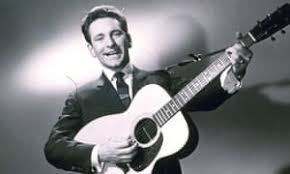
I first met Lonnie Donegan in 1971 when I was accompanying Mary Hopkin at the Winter Gardens, Margate. She was top of the bill and by then Lonnie was not the name he had been in the Fifties. He was striving to make a come-back and was racing up and down almost daily from Margate to recording studios in London. Incidentally, he told me that the way he worked was to perform one song almost endlessly for up to three hours so that everyone became almost mesmerised and all the nooks and crannies of the music were fully explored and the performance was uninhibited. Perfection was not the aim; intensity and excitement were the order of the day. Let’s face it, those early hits were more shouted than sung, but the power was there.
No one should forget that it was Donegan who started not just the skiffle boom (which originated in down town Chicago) but that he also provided the model for the thousands of pop, rock and blues bands that developed in its wake. Quite simply, modern popular music began with skiffle, and the debt that the world owes that little Glaswegian is inestimable. Before Donegan there were solo artists with session man bands or orchestras. The ordinary bloke didn’t have a look in. Then there was this wild homespun music on the telly and Lonnie telling us he only knew three chords and how easy it was. It was him saying this that got me started. The manufacturers and shops weren’t ready for the demand and most of us started on horrendous things from the Far East with telephone wire for strings and half-inch high actions. When Lonnie performed at the Albert Hall last year a host of stars were fighting to share the bill as support acts. If only he got his management sorted he really could hit the big time again – even in his mid-60s. Perhaps the most illustrious of the early skifflers, by the way, were the Beatles.
Anyway, I arranged to see Lonnie when he came to Hanley late last year. He was guesting with the Chris Barber Jazz Band, the outfit with whom it all began. There was no way he would have recognised me now, of course, but as I stood there watching the band doing sound checks, Lonnie passed me twice. The third time he said: “You still here? Do I owe you money or something?” Actually, I learned later that he did know who I was. This was an example of his Southern humour, which tends to be sarcastic and can on occasion upset people who are not aware that it is, in fact, a sign of friendly familiarity.
I had a long chat with Lonnie in his dressing room. The man is a power house, though he is having to learn to slow things down a bit. His performance on stage that night was superb. He is singing better than he was 35 years ago – mellower now but still exciting. And he didn’t cheat his audience. We got most of the old hits, not just a load of nondescript new stuff – a trap fallen into by more than one old timer.
This, then, is an abridged transcript of my conversation with Lonnie at the Royal Theatre, Hanley on the 9th of December, 1999:
MR: How long have you been in Spain now?
LD: About nine years. The principle of the pad in Spain is that we have been getting so much work in Europe that we needed a base over here. It’s a very long commute every fortnight to California. I’m domiciled in America now, a Permanent Resident, an alien …… beam me up Spock! We live in Lake Tahoe.
MR Do you do much in America?
LD: No, very little now. I used to.
MR: I remember when we were at the Winter Gardens you told me you had seen Frankie Laine in Las Vegas, when you were playing across the road from him.
LD: Yes, that’s right. He’s passed away now, hasn’t he?
MR: Not surprising really. You were saying that his voice had gone even then; that people were really coming to see a legend.
LD: Lovely bloke, but he had a problem with me because apparently he had just recorded Rock Island Line, got it in the can, and then mine came out. That was a bit lucky for me.
MR: I see you still play proper instruments. What do think of synthesisers and the like?
LD: I play a Martin 0008 and a Vega de Luxe banjo. The band is still more or less a skiffle line up with a drummer-cum-washboard player, a guitarist and Chris (Barber) on bass. Synthesisers are OK in the right place, but I wouldn’t use one live, or on a skiffle record.
At this point Lonnie’s son, Anthony, came into the room. I was introduced and asked Anthony if he did anything musical. At this Lonnie quipped: “No, he’s my son!” In fact, he plays drums and guitar but is not planning on having a career in music.
MR: You haven’t actually married Sharon yet, have you?
LD: 19 years we’ve been married! What you’re thinking of is that we renewed our vows – there was a splash in Hello magazine.
MR: Oh! So that’s what it was. You’ve died and come back again, as it were.
LD: I’ve nearly done that, as it happens. Two heart operations, but I’m still here.
MR: You don’t have a Scottish accent?
LD: Neither do you!
MR: But I wasn’t born in Glasgow.
LD: My father is Scottish, my mother is Irish, but we left when I was two and came to London. I’m an East-ender really.
MR: When did you start playing any kind of music?
LD: Guitar, when I was 14, singing House of the Rising Sun and Frankie and Johnnie. Same as I am now; it’s taken me this long to learn the words!
MR: Amongst contemporary artistes, have you got any particular people you like, or dislike?
LD: Well, yes. Actually, I’ve been doing a lot of work lately with Van Morrison, who is a skiffle disciple, apart from his own poetic work, and we have a new album which is coming out in a couple of weeks, on January 4th, on BMG and Van is singing a couple of tracks on that – Alabamie Bound and Muleskinner Blues. In fact, the album is called Muleskinner Blues. We have just done a live recording in Belfast together; Chris came along and we’ve been doing a lot together. So, if you ask me who amongst the contemporaries, I’d say its Van Morrison for me. (Lonnie can be rather modest at times. On the record he mentioned, about half the tracks were written by him.)
MR: Do you still enjoy touring?
LD: The travelling gets me down, not the playing – it’s the travelling. You’re paid to travel; the playing is fun.
MR: What are your tastes in music? What do you listen to for pleasure?
LD: I’m a Liquorice Allsorts person – bit of everything. If it’s late at night I might play some Delius – something classical. If I’m in a fun mood I put on some jazz, even a country record or a bit of Emmylou Harris.
MR: At Margate you were as much a comedian as a singer. When did humour become a part of your act?
LD: I’ve always been funny, from when I was very young. You’re either funny or your not. Chris (Barber) will never get laughs. I’m an entertainer: that’s the basis of everything any artiste does. You’re there to entertain – doing whatever you’ve chosen to do. If you’re not there to entertain – get off. If you’re there to indulge yourself – go and do it in the bathroom! I chose folk music and a few facetious retorts. (Yes, he can be facetious, as I have already mentioned, but he is also a very good stand-up comic with a ready wit.)
MR: What did you do before joining the Chris Barber Band?
LD: Selling, selling shirts…sweeping up roads.
MR: Now listen: why don’t you go out on your own? It’s you people want to see. You don’t need a band. You could go out for less money and establish yourself on the festival scene. You’d not only be a major draw but you’d come up with the goods. An awful lot of name folk artistes wear emperor’s clothes. There is certainly no one around who generates the excitement that you do.
LD: No. I’m a band man. I need them at the back of me. Anyway, I’d go out for the same money, even without a band. I have done it, you know. Sitting on a stool and going through my life’s story. It was a two and a half hour show. The hardest part was the first half where I just sat on a stool and did gags and went through my life story. The band came on in the second half. No, solo is not for me. Besides, being on the road without a band is so boring. I’d die of boredom. Someone once said: “Well do it as a beginning.” “Beginning?” I said, “I’m ending!”
MR: You live in Spain a lot these days. Do you like flamenco?
LD: Yes, I love it, and it’s pure folk music, you know: it comes from the people and was not foisted upon them by composers. Its self expression, passion, emotion, and that’s how I work. I like natural music. If you go down the pub and someone sings, they’ll sing (he demonstrates in a coarse, strong voice). They won’t go (demonstrates in a high, refined voice). That’s a false sound; not a natural sound.
MR: Well, that’s your ‘two songs to go call’, so I’ll be on my way. It really has been so nice to see you again.
With that, a virtually naked Lonnie Donegan scampered across the dressing room to don his stage clothes. He looked so little, even fragile, yet so full of energy that if there was a power failure all you would have to do is plug his big toe into the mains and he’d light up half of Hanley. I’ll tell you something; if Martin Carthy is deserving of an MBE, then a knighthood would be hardly good enough for Lonnie Donegan.
SIMON JONES meets the man (1999).
15th April 2019 will be the 11th anniversary of Michael Raven’s passing at the age of 70. In order to commemorate his life and work, I am publishing this interesting interview he gave to Simon Jones in 1999.

RAVEN ON
SIMON JONES meets the man who’s nearly done it all, MIKE RAVEN; hearing yarns of the early folk scene in Birmingham, lots about animals, Mary Hopkin, Lonnie Donegan, local history, how the police make good demolition contractors, the anti-hunting lobby and the terrible truth of Martin Carthy, flamenco guitarist!
Don’t you wish you could do what Mike Raven’s done? It seems he’s done pretty much whatever he pleased and there isn’t really anything he hasn’t had a bash at. In a life inadequately described as ‘full’ he dismisses forty years or so with a smile of the face and an easy-going phrase, “I like to keep busy.” We meet on a glorious afternoon, the sun out and a high breeze.
“ I love this area, “ Raven offers as we sit round a table, piles to talk about and so little time to do justice to such experience. “ There is so much in Cheshire, Shropshire and Staffordshire if you scratch the surface, stop, take time to talk to people and listen.”
He should know, covering three or four counties he complies books of local history, books of Victorian photos and then gazetteers as thick as a Liverpudlian accent. His attention to detail is amazing. “I like to amass information,” he bluffs “and I admit I see things as a challenge. If somebody says to me they want an article on a castle in, er… I don’t know, let’s say Market Drayton, I have to find out about it lock stock and barrel.”
Besides publishing most of his own work, he writes a wickedly-observed column for County set magazines – you know the sort, glossy ads for houses nobody can afford and pages of Society photos of nobody you’ve ever heard of – called Raven’s Eye.
“I love that,” he grins: “you can put anti-blood sport rhetoric on the next page to the local Hunt. I like to live dangerously!” And if there’s one thing bothers Mike Raven it’s blood sports. He is vociferous in his denial – why so?
“I love animals; always have, since I was a child. I won’t go into details but I think hunting, especially fox hunting, is loathsome. There’s just so much that’s repulsive. I must admit to being active as far as banning hunting is concerned. I’ll take photos, write articles, go on protests, whatever. As much as I like the traditions of our country, this is one that could happily be consigned to the dustbin.”
‘The Unspeakable Chasing the Inedible,’ he blazoned across full colour pages of a Staffordshire journal. His own conversion involved the painful loss of his beloved dogs to a gung-ho idiot with a gun; he still finds it hard to talk about the occurrence. Back in the mists of his own past he was once described as the “Robin Hood of the Black Country,” by a local paper which documented his RSPCA, PDSA activities. At mention of that he just smiles.
Let’s talk a bit about music Mike; after all it’s about time we did. Where did it start seriously for you?
“My father had a liking for classical music, so my brother (John) and I grew up with Mozart ringing in our ears, but I learnt to play guitar while I was at Keele University. I got into skiffle through Lonnie Donegan, who was an early hero. I got to meet him many, many years later when he was trying to re-establish himself. He’d bash out his skiffle hits every night at volume but the theatre establishment wanted him to play it safe and go for ‘family’ entertainment. I remember thinking, ‘God, this guy began something which turned music upside down and you want him to come to heel?’ It did, you know: skiffle was the root of rock and acoustic music in this country. It had feet in so many camps and turned so many people on to the fact that you could make your own tunes. This was twenty years before punk. Lonnie Donegan started it all. Thankfully now he seems to be getting his due recognition.”
This was? The late 50s?
“Yeah, about the same time I got hooked on flamenco guitar. I remember having a conversation with Martin Carthy about this and he confessed that he’d once tried to be a flamenco picker. Between University and various jobs here and there I was taught by a genuine gypsy in Barcelona and I spent time in Andalucia and Granada playing there with guitarists in the local bars.”
Returning to England, he and John got together to play folk music around Birmingham. It wasn’t long before they really were the centre of the Black Country trad circuit.
“We started a folk club in Wolverhampton and began researching old industrial songs, some ballads and we wrote a few ourselves in similar vein. As trios were all the rage in the early folk days – you know Peter Paul & Mary – we enlisted a flute player called Derek Craft and we bashed around the Midlands for years as The Black Country Three. We had an odd repertoire but we did loads of work, TV, radio: all short order stuff, phoned the night before – write a song and sing it in studio the next day. We were genuinely popular and I think we did have a huge impact on local research and folklore in Birmingham.”
Their voices were heard beyond too, they got to cut an album on the prestigious Transatlantic label, home to much of the happening folk action of the day, and a right lot they look on the cover: all suits and big smoke stacks in the background – very atmospheric. Rumour has it they were being chased by Philips for a follow up, “but we split up. There was the usual ‘musical differences’; so I went on to work solo and, to be honest, found that just as lucrative. Work came in from radio and television; I was, after all, one of the few guitarists who did a purely instrumental set.”
So it was guitar all the way until you got to play with Mary Hopkin?
“I did; that was a bit later, though, about 1971. I was her accompanist whilst she played on the south coast. A great girl – she was barely twenty when I worked with her, but whoever chose her music should have been shot; I mean, KNOCK, KNOCK! She wanted to be more singer-songwriter but it never happened, which is a great pity. Anyway, she dedicated herself to her family and, as far as I know, was quite happy to do that.”
Not long after Mike found a partnership of his own; a visit to a folk club in Stafford brought contact with Irish/English singer Joan Mills.
“Her mother was Irish,” Raven relates with a twinkle in his eye. “We’ve recorded ten albums or so together and worked with a band called Reynardine. It grew out of Irish sessions in Birmingham – Joan and me, a whistle player and a fiddle player.”
The results of the union are part of the Raven archive known uncannily as THE REYNARDINE TAPES. Yet, surprisingly, “We gave up playing folk music live for a time, though we still recorded.”
And you began to write guitar books and music books in general which often reflected what you were fascinated with at the time.
“Yes, I’ve done about eighty or so,” he deadpans, “but it isn’t all guitar music; there are books about dances, folklore, history and poetry. The death of my dogs got me writing poetry.”
What constitutes a Raven /Mills performance these days?
“A real mix of things actually; I don’t think you could actually say we play folk music in the real sense. There would be some Welsh tunes – I was born in Wales and got into Welsh music latterly – and I’ll play some lute-type pieces, which is another interest of mine. We rework the poetry of people like Housman to traditional music and I might even play a flamenco piece for old times’ sake.”
Raven’s regionality is something of a trademark specialism; not only does he trundle round Cheshire, Shropshire – where he now lives – and Staffordshire, but he digs wider into the border country of England and Wales, issuing recordings rooted in counties like Herefordshire. Strange to tell too, that for a man so steeped in music, he actually gave up playing his guitar for two or three years whilst working up his massive regional guides. As he puts it: “I climbed hills, nosed in churches and saw more secret places than you’d find if you searched with any old gazetteer. I had to give up everything else though; it really took time.”
First came the Staffordshire volume and then the Shropshire edition. “I’d like to do one for Cheshire,” he muses, as the tape clatters noisily to a stop.
And there’s more to Raven: his tales of life in the army really should be put into print and his guise as a landlord/building renovator, a phase of his life exemplified by the Stafford police bursting through a house wall in one of his properties on the pretence of looking for drugs. “They never found an ounce,” he mutters. “Took me years to get them to pay up for the damage.”
I flick casually through some promo pictures. On each of them, whether with Joan or just his guitar, Mike Raven looks the very picture of concentration. The same inscrutable gaze 1959, 1969, 1979, 1989 and, you guessed, it 1999.
Had he ever thought of putting his life into a book?
“I’ve thought about it, but tell me, Simon, who’d believe it?”
Look out for the next blog: the interview Mike did with skiffle king, LONNIE DONEGAN
Welcome to my new website and my first Blog post!
Welcome to my new website! I hope the new format will enable me to contribute and share more of my memories of Michael Raven, his music, performances, history and interests.
Below is a video of Epitaph a track from the CD “Flowers of Picardy” – a superb poem by A E Housman, set to haunting music by Michael Raven. Filmed at Cannock Chase German Military Cemetery, where lie German Nationals who lost their lives in the United Kingdom in the two World Wars.
Wish me well in this new adventure!
Joan